
PROPERTY & VALUABLES
Unclaimed Safe Deposit Boxes & Valuables
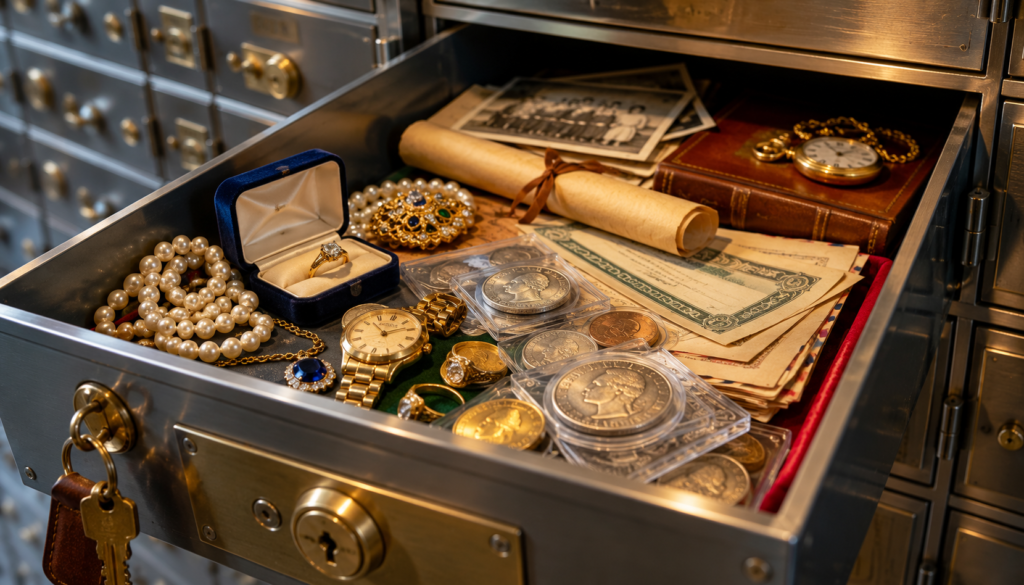
Safe deposit boxes often contain some of a family’s most valuable possessions, including jewelry, cash, stock certificates, coins, legal documents, and treasured keepsakes. When an owner moves, passes away, or loses track of a box, those assets can eventually become difficult to locate.
This guide explains how safe deposit boxes become unclaimed, the types of property commonly found inside abandoned boxes, and the steps you can take to determine whether valuables may still belong to you or your family.
This guide explains how safe deposit boxes become unclaimed, the types of property commonly found inside abandoned boxes, and the steps you can take to determine whether valuables may still belong to you or your family.
SAFE DEPOSIT BOXES EXPLAINED
Understanding Unclaimed Safe Deposit Boxes and Valuable Property
Unlike most forms of unclaimed property, safe deposit boxes frequently contain physical assets rather than cash. Banks and credit unions may eventually classify a box as abandoned when rent goes unpaid, contact with the owner is lost, or the box remains inactive for an extended period. When that happens, the contents may be transferred to state custody while ownership rights remain with the rightful owner or heirs.
Personal Valuables
Jewelry, watches, collectibles, and family heirlooms are among the most common items stored in safe deposit boxes. Many of these assets remain forgotten for years because family members are unaware a box exists.
Financial Records
Important documents such as stock certificates, bonds, deeds, wills, trusts, and business records are frequently placed in safe deposit boxes for long-term safekeeping. These records can sometimes be more valuable than the physical property itself.
Family Keepsakes
Photographs, military records, letters, and historical family documents are often discovered in abandoned boxes. While they may have limited monetary value, they can hold tremendous personal significance.
COMMON SAFE DEPOSIT BOX ASSETS
Cash & Currency
Many abandoned boxes contain cash that was stored for emergencies or long-term safekeeping.
Stock Certificates
Physical share certificates remain one of the most valuable financial assets commonly recovered.
Coins & Precious Metals
Gold, silver, and collectible coins are frequently stored inside safe deposit boxes.
Savings Bonds
Government and investment bonds are often discovered years after they were originally purchased.
Legal Documents
Wills, trusts, deeds, and estate records are among the most commonly recovered documents.
Collectibles
Rare memorabilia, stamps, antiques, and personal collections are often found in abandoned boxes.
Many abandoned safe deposit boxes contain assets with both financial and sentimental value. Even when cash is not present, the contents may provide important ownership records, estate documents, or family history.
SAFE DEPOSIT BOX GUIDES
Find Lost Safe Deposit Boxes and Valuable Assets
Whether you’re searching for a forgotten safe deposit box, investigating a family estate, or trying to locate valuables that may have been stored years ago, these guides can help you understand where to search and what to expect.
Many people assume abandoned safe deposit boxes are empty. In reality, states regularly take custody of boxes containing jewelry, financial records, stock certificates, cash, and other valuable property that still belongs to the rightful owner or heirs.
WHY ASSETS BECOME UNCLAIMED
Why Safe Deposit Boxes Become Abandoned
Most people never intend to abandon a safe deposit box. However, life events, family transitions, and outdated records can make it difficult for banks to maintain contact with box owners. Over time, inactivity can trigger dormancy procedures that eventually lead to state custody of the contents.
Owners Pass Away
Many abandoned boxes belong to individuals who passed away without informing family members that a safe deposit box existed. As a result, valuable assets may remain undiscovered during estate administration.
Family Members Are Unaware
Heirs often have no knowledge that a safe deposit box was maintained. Without documentation or access records, the existence of the box may remain hidden for years.
Banks Lose Contact
Address changes, outdated contact information, and inactive accounts can make it impossible for financial institutions to communicate with the owner.
Long-Term Inactivity
Safe deposit boxes are often intended for long-term storage. Years of inactivity can eventually trigger abandonment procedures even when the owner never intended to give up the property.
COMMON PATH TO AN UNCLAIMED SAFE DEPOSIT BOX
1.
Safe Deposit Box Is Opened
2.
Contact Information Becomes Outdated
3.
Box Remains Inactive
4.
Bank Begins Dormancy Process
5.
Contents Are Transferred to State Custody
COMMON CLAIM SITUATIONS
Which Situation Sounds Most Like Yours?
Most safe deposit box searches begin with a family event, estate settlement, or unexpected discovery. If one of the situations below sounds familiar, it may help identify the best place to begin your search.
A Parent or Relative Passed Away
You believe a family member may have maintained a safe deposit box but don’t know where it was located.
Estate Search • Family Assets
I Found an Old Safe Deposit Box Key
An old key may be the first clue that a forgotten box exists.
Keys • Box Identification
I'm Settling an Estate
Executors frequently discover safe deposit box references while reviewing financial records and estate documents.
Estate Administration • Probate
I Found Old Bank Records
Statements and correspondence may indicate a safe deposit box relationship with a bank or credit union.
Financial Records • Banks
I Believe Valuables Were Stored
Family stories or records suggest jewelry, documents, or collectibles may have been placed in a safe deposit box.
Valuables • Heirlooms
I Don't Know Which Bank Held the Box
Many families know a box existed but have no record of which institution managed it.
Unknown Bank • Property Search
SAFE DEPOSIT BOX FAQS
Frequently Asked Questions
Learn more about abandoned safe deposit boxes, ownership rights, estate claims, and recovering valuable property.
How do I find an unclaimed safe deposit box?
Start by searching state unclaimed property databases and reviewing financial records belonging to you or a deceased family member. Estate files, bank statements, and correspondence may provide clues about where a box was maintained.
What happens to an abandoned safe deposit box?
After the required dormancy period, financial institutions may inventory the contents and transfer them to state custody according to state law.
Can heirs claim an unclaimed safe deposit box?
Yes. Heirs, beneficiaries, executors, and estate representatives can often recover assets after providing documentation that establishes ownership or legal authority.
What is commonly found in abandoned safe deposit boxes?
Common items include jewelry, cash, stock certificates, bonds, legal documents, family photographs, military records, collectibles, and personal keepsakes.
Can cash inside a safe deposit box become unclaimed property?
Yes. Cash discovered inside an abandoned box may be reported and held as unclaimed property until claimed by the rightful owner.
How long before a safe deposit box becomes unclaimed?
The timeline varies by state, but most jurisdictions require several years of inactivity before dormancy procedures begin.
What if I don't know which bank held the safe deposit box?
Old financial records, estate documents, tax returns, and state databases may help identify the institution that managed the box.
Can stock certificates found in a safe deposit box still have value?
Potentially. Even old certificates may represent ownership interests, merger rights, or other investment assets that still retain value.
Do states sell property from abandoned safe deposit boxes?
Some states may liquidate certain assets after taking custody. However, ownership records are generally maintained so rightful owners can claim proceeds when eligible.
Is searching for an unclaimed safe deposit box free?
Yes. Official state unclaimed property databases are free to search and are often the best starting point for locating abandoned safe deposit box assets.
START YOUR SEARCH
Ready to Search for an Unclaimed Safe Deposit Box?
Whether you’re searching for family heirlooms, forgotten valuables, stock certificates, legal documents, or other property stored in a safe deposit box, official state resources can help determine whether assets may still be waiting to be claimed.