
How to Search Unclaimed Money Using a Middle Name
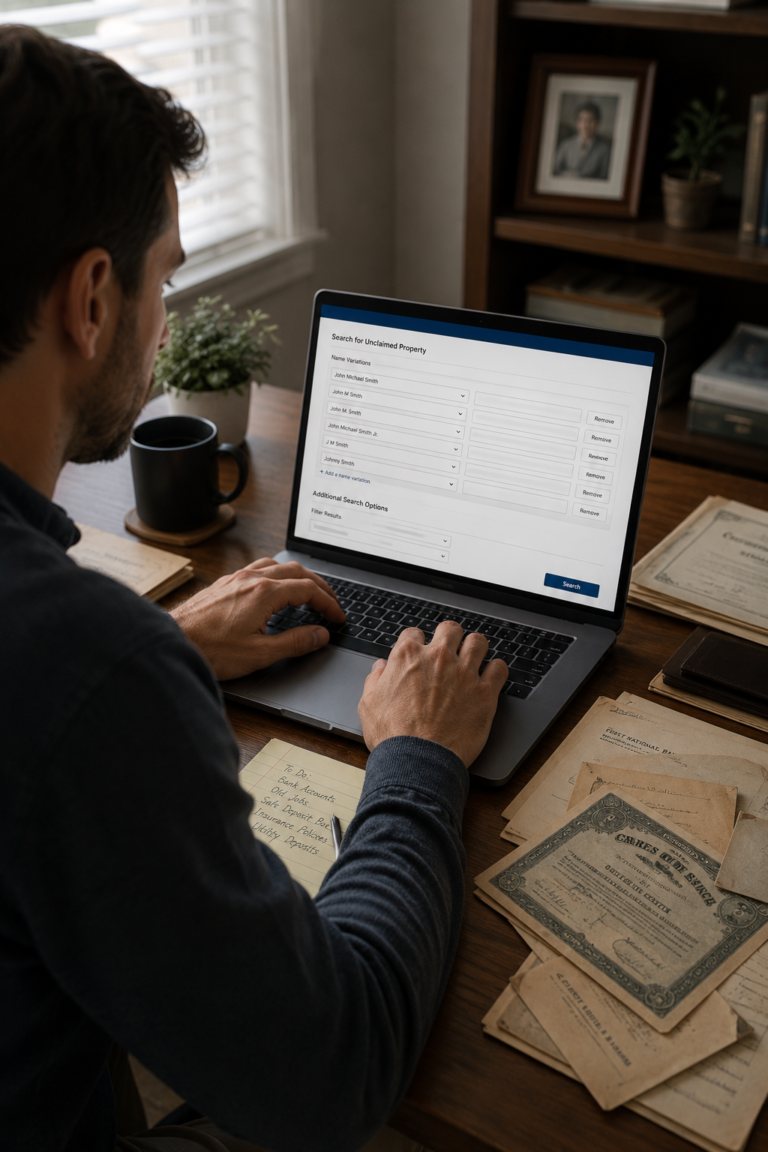
Searching for unclaimed money is often more complicated than people expect. One of the biggest reasons is that names are not always reported consistently across old bank accounts, utility deposits, payroll systems, insurance policies, and other financial records. A missing middle name, an abbreviated middle initial, or even a nickname can sometimes affect whether a potential match appears in search results.
Many people only search one version of their name and assume there are no records connected to them. In reality, unclaimed property databases may contain multiple variations of the same person’s name depending on how the original company stored the information years ago. A forgotten paycheck might appear under a middle initial, while an old savings account could include a full middle name or even an outdated address.
Understanding how name variations work can make searches more effective and help avoid missing legitimate property records. In this guide, you’ll learn how to search unclaimed money using a middle name, why different name formats matter, common mistakes people make during searches, and practical ways to improve your chances of finding overlooked funds through official state-run unclaimed property systems.
Many people only search one version of their name and assume there are no records connected to them. In reality, unclaimed property databases may contain multiple variations of the same person’s name depending on how the original company stored the information years ago. A forgotten paycheck might appear under a middle initial, while an old savings account could include a full middle name or even an outdated address.
Understanding how name variations work can make searches more effective and help avoid missing legitimate property records. In this guide, you’ll learn how to search unclaimed money using a middle name, why different name formats matter, common mistakes people make during searches, and practical ways to improve your chances of finding overlooked funds through official state-run unclaimed property systems.
Why Middle Names and Initials Can Affect Search Results
Most unclaimed property records are submitted to state agencies by businesses and financial institutions after accounts become inactive for a legally required period of time. These records are transferred exactly as they existed in the company’s system when the account was reported.
That means the formatting of a person’s name may vary widely depending on where the account originated. One employer may have stored a full legal name, while another only used a first name and middle initial. Older computer systems sometimes shortened names automatically or omitted middle names entirely.
For example, someone named “Jonathan Michael Carter” could appear in different databases as:
It is also important to understand that state systems are designed primarily to help locate possible matches, not automatically confirm ownership. Even if a name variation appears different from your current legal name, supporting details such as addresses, employers, or relatives may still connect the property to you.
Searching carefully and trying multiple combinations is often one of the simplest ways to improve search accuracy.
That means the formatting of a person’s name may vary widely depending on where the account originated. One employer may have stored a full legal name, while another only used a first name and middle initial. Older computer systems sometimes shortened names automatically or omitted middle names entirely.
For example, someone named “Jonathan Michael Carter” could appear in different databases as:
- Jonathan Carter
- Jonathan M Carter
- Jon Carter
- J M Carter
- Jonathan Michael Carter
It is also important to understand that state systems are designed primarily to help locate possible matches, not automatically confirm ownership. Even if a name variation appears different from your current legal name, supporting details such as addresses, employers, or relatives may still connect the property to you.
Searching carefully and trying multiple combinations is often one of the simplest ways to improve search accuracy.
Common Reasons Names Appear Differently in Old Financial Records
Name inconsistencies are extremely common in unclaimed property records, especially when accounts are older or tied to previous addresses and employers. Many records entered state databases years after the original account was opened, which increases the chances of formatting differences or incomplete information.
Some of the most common situations include:
These differences are usually administrative rather than suspicious. They often reflect how information was collected at the time the account was created.
Another common issue involves family members who inherit property from deceased relatives. An heir may search using the relative’s current legal name while overlooking older records tied to middle initials, former addresses, or older spellings.
Because unclaimed property systems rely heavily on historical data, flexibility during the search process is important.
Some of the most common situations include:
- Older payroll systems that only stored middle initials
- Bank accounts opened using shortened versions of names
- Insurance policies using full legal names instead of nicknames
- Utility accounts connected to former addresses
- College records created with abbreviated names
- Typographical errors entered during account setup
- Name changes from marriage or divorce
- Investment accounts transferred between companies over time
These differences are usually administrative rather than suspicious. They often reflect how information was collected at the time the account was created.
Another common issue involves family members who inherit property from deceased relatives. An heir may search using the relative’s current legal name while overlooking older records tied to middle initials, former addresses, or older spellings.
Because unclaimed property systems rely heavily on historical data, flexibility during the search process is important.
How to Search More Effectively Using Name Variations
Searching thoroughly is one of the best ways to avoid overlooking possible matches. Since every state database works slightly differently, using multiple search strategies can improve the chances of finding records connected to you.
Start With Your Full Current Legal Name
Begin with the version of your name you currently use on official identification documents. Include your first and last name and, when possible, your full middle name.
This provides the most direct starting point and may immediately reveal exact matches.
This provides the most direct starting point and may immediately reveal exact matches.
Try Searches Without a Middle Name
Some companies never collected middle names at all. After your initial search, repeat the search using only your first and last name.
This broader approach may reveal records that were reported with incomplete information.
This broader approach may reveal records that were reported with incomplete information.
Search Using a Middle Initial
Many older financial systems relied on middle initials instead of full names. Searching this variation separately is important.
Examples include:
Examples include:
- Sarah E Thompson
- Sarah Elizabeth Thompson
- Sarah Thompson
Use Nicknames and Shortened Names
Some organizations recorded informal versions of names rather than full legal names. This was especially common with older payroll systems and local service providers.
Examples include:
Examples include:
- Mike instead of Michael
- Jenny instead of Jennifer
- Tom instead of Thomas
- Liz instead of Elizabeth
Search Previous Names
People who changed names after marriage, divorce, adoption, or other legal events should search all prior names connected to older financial accounts.
This is particularly important for accounts tied to previous residences or jobs from many years ago.
This is particularly important for accounts tied to previous residences or jobs from many years ago.
Search Every State Connected to Your History
Unclaimed property is generally reported to the state associated with the owner’s last known address. If you lived, worked, attended college, or owned property in multiple states, search each state individually.
An old paycheck or dormant account could still be sitting in a state where you no longer live.
An old paycheck or dormant account could still be sitting in a state where you no longer live.
Review Potential Matches Carefully
Not every legitimate record will look identical to your current information. Review additional details such as:
- Old addresses
- Former employers
- Family names
- Business names
- Cities where you previously lived
What Happens After You Find a Possible Match
Finding a potential match in a state database is only the beginning of the process. Before property can be released, the state must verify ownership and confirm that the claim is legitimate.
The documentation required depends on the state and the type of property involved. However, most claims require some combination of identity and address verification. Common documents may include:
Similarly, if a middle initial differs from your current records, supporting documents such as old tax returns, utility bills, or employment paperwork may help confirm ownership.
Providing accurate and complete documentation can help reduce delays during the review process.
The documentation required depends on the state and the type of property involved. However, most claims require some combination of identity and address verification. Common documents may include:
- Government-issued photo identification
- Proof of current mailing address
- Social Security number verification
- Documents linking you to a previous address
- Marriage certificates for name changes
- Probate or estate paperwork for inherited claims
Similarly, if a middle initial differs from your current records, supporting documents such as old tax returns, utility bills, or employment paperwork may help confirm ownership.
Providing accurate and complete documentation can help reduce delays during the review process.
How to Recognize Legitimate Unclaimed Property Programs
Official unclaimed property searches are free through state-run programs. Most states manage unclaimed property through the state treasury department, comptroller’s office, or another government financial agency.
These programs are designed to return abandoned assets to their rightful owners after businesses lose contact with account holders over time.
Unfortunately, confusion around unclaimed money also creates opportunities for scams and misleading solicitations. Some common warning signs include:
Official state agencies generally provide free searches and explain documentation requirements clearly before processing claims. They also do not require payment simply to check whether property exists.
These programs are designed to return abandoned assets to their rightful owners after businesses lose contact with account holders over time.
Unfortunately, confusion around unclaimed money also creates opportunities for scams and misleading solicitations. Some common warning signs include:
- Requests for upfront payment before explaining the claim
- Emails asking for banking information immediately
- High-pressure calls demanding urgent action
- Websites pretending to be official government agencies
- Promises of guaranteed payouts before verification
Official state agencies generally provide free searches and explain documentation requirements clearly before processing claims. They also do not require payment simply to check whether property exists.
How Long the Process Usually Takes
The timeline for unclaimed property claims varies widely depending on the state, the complexity of the claim, and the quality of the documentation submitted.
Before funds are transferred to the state, businesses must typically hold dormant accounts for a legally defined inactivity period. Depending on the property type, this dormancy period may range from one to five years or longer.
After property reaches the state, processing times can vary based on several factors, including:
Incomplete documentation is another common reason for delays. Blurry uploads, expired identification documents, or mismatched addresses can slow the review process significantly.
Because every state manages claims independently, timelines can differ considerably from one state to another.
Before funds are transferred to the state, businesses must typically hold dormant accounts for a legally defined inactivity period. Depending on the property type, this dormancy period may range from one to five years or longer.
After property reaches the state, processing times can vary based on several factors, including:
- Whether the claim involves name discrepancies
- The age of the account
- Whether the property belongs to a deceased relative
- The number of documents required
- Manual review procedures within the state agency
Incomplete documentation is another common reason for delays. Blurry uploads, expired identification documents, or mismatched addresses can slow the review process significantly.
Because every state manages claims independently, timelines can differ considerably from one state to another.
Helpful Tips for a More Thorough Search
- Search your name using full middle names and middle initials separately
- Try older addresses connected to previous jobs, apartments, and utility accounts
- Search maiden names, former married names, and legal name changes
- Check every state where you have lived, worked, or attended school
- Use official state unclaimed property websites for all searches and claims
- Keep copies of old records that may help prove ownership later
- Review search results carefully instead of relying only on exact matches
- Repeat searches periodically since new property is added throughout the year
Next Steps
Searching for unclaimed money using a middle name often requires more flexibility than people expect. Financial records created years ago may contain abbreviations, nicknames, initials, or incomplete information that does not perfectly match your current legal identity. Taking the time to search multiple name variations can make a meaningful difference, especially when older accounts or previous addresses are involved.